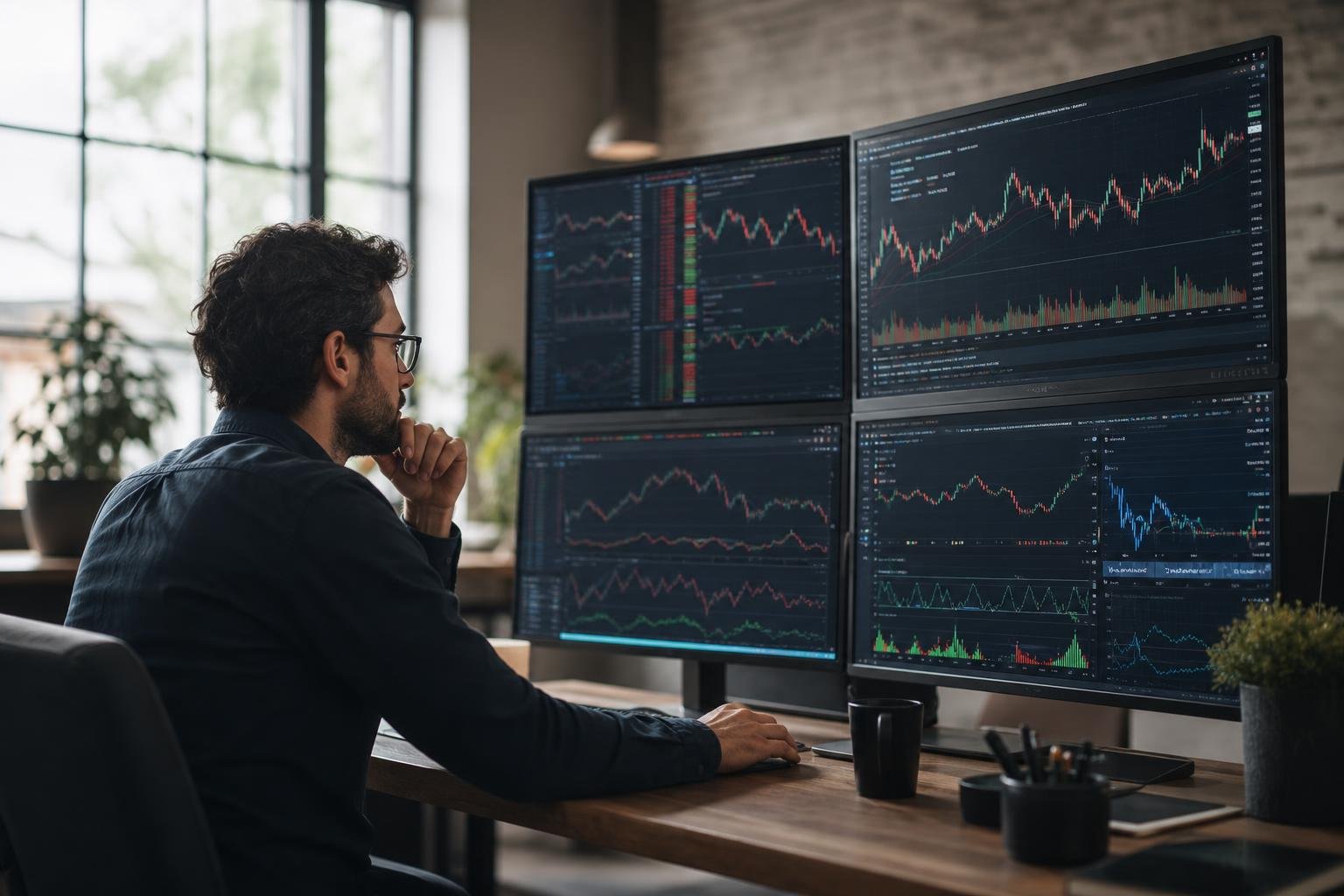
Backtesting is a crucial technique for crypto traders aiming to validate and refine their trading strategies using historical market data. Done correctly, it helps traders evaluate potential performance before deploying real capital. However, backtesting crypto trading strategies requires understanding its limitations, data integrity needs, and risk factors to avoid misleading results. This article offers a practical, step-by-step guide on how to backtest crypto trading strategies safely and effectively, including data best practices and integration with crypto trading bots.
Table of Contents
- What is Backtesting in Crypto Trading?
- Importance and Limitations of Backtesting
- Necessary Data and Tools for Backtesting
- Step-by-Step Guide to Backtesting Your Crypto Strategies
- Risks and Common Pitfalls to Avoid
- Integrating Backtesting with Automated Crypto Trading Bots
- Evaluating Backtest Results Effectively
- Alternatives and Complements to Backtesting
What is Backtesting in Crypto Trading?
Backtesting involves applying a trading strategy to historical market data to assess how the strategy would have performed in the past. In crypto trading, it means simulating buy and sell decisions on historical price, volume, and other relevant data to estimate profitability and risk metrics without risking actual money. This process helps traders understand potential outcomes and tweak their strategies before live trading.
Importance and Limitations of Backtesting
Backtesting provides initial validation, enabling traders to identify strategies with promising risk-reward profiles and avoid those likely to underperform. It saves time and capital by filtering ideas before live markets. However, it has limitations: past performance does not guarantee future results, data inaccuracies can mislead, and overfitting strategies to historical data can cause poor real-world performance. Awareness of these limitations ensures more realistic expectations.
Necessary Data and Tools for Backtesting
Reliable and comprehensive historical data is fundamental. This includes accurate price feeds, volume, order book snapshots, and sometimes external indicators. Data quality matters: gaps, outliers, or incorrect timestamps distort backtesting outcomes. Additionally, choosing tools that support relevant data formats, strategy scripting, and timeframes is critical. Popular tools range from programming libraries like Python's Backtrader to specialized platforms integrating with crypto APIs. Automated bot platforms often include backtesting modules that simplify workflow integration.
Step-by-Step Guide to Backtesting Your Crypto Strategies
1. Define clear entry, exit, and risk rules for your strategy. 2. Obtain high-quality historical price and volume data relevant to your target exchanges and assets. 3. Choose a backtesting platform or environment that fits your technical skill and strategy complexity. 4. Implement your strategy rules as code or within the tool’s trading bot dashboard interface. 5. Run the backtest over a suitable historical period, ensuring data covers various market conditions. 6. Analyze performance metrics such as profitability, drawdown, win rate, and risk-adjusted returns. 7. Refine strategy parameters cautiously to avoid curve fitting. 8. If possible, perform out-of-sample and walk-forward testing to validate robustness.
Risks and Common Pitfalls to Avoid
Traders should watch for overfitting, where a strategy is excessively tailored to historical quirks, resulting in poor live performance. Survivorship bias, where only successful assets or exchanges are included in data, skews results positively. Ignoring transaction costs, slippage, and exchange fees can paint unrealistic profit pictures. Also, be aware of look-ahead bias — using future information unintentionally. Comprehensive understanding and adjusting for these risks improve backtesting reliability.
Integrating Backtesting with Automated Crypto Trading Bots
Linking backtesting results to an automated crypto trading bot workflow streamlines strategy validation and deployment. Once a strategy shows promise in backtests, it can be uploaded or scripted into a bot platform that supports testing and live execution via exchange APIs. Some platforms enable forward-testing on live markets with virtual balances (paper trading) to further verify strategy resilience before committing capital. This integration facilitates adaptive iteration cycles with risk controls embedded.
Evaluating Backtest Results Effectively
Focus on comprehensive metrics to evaluate strategy robustness, including total return, maximum drawdown, Sharpe ratio, profit factor, and win-loss ratios. Look for consistency across multiple market phases rather than exceptional returns in a narrow timeframe. Visual review of trade logs and equity curve behavior can reveal insights beyond numbers. Combining quantitative outputs with qualitative assessment reduces likelihood of deploying fragile strategies.
A backtest estimates strategy behavior from historical inputs. To inspect a recorded bot decision instead, use Gunbot Replay trading analysis to restore the saved context around that moment.
Alternatives and Complements to Backtesting
Backtesting should be part of a broader strategy evaluation approach. Paper trading, or simulated live trading, tests strategies under current market conditions without actual capital risk. Forward testing provides real-time feedback on strategy viability. Additionally, scenario analysis and stress testing help assess behavior under rare but impactful events. Combining these methods can provide a fuller risk profile than backtesting alone.
For a structured progression from historical testing to simulated current-market testing and limited live capital, review the backtesting vs paper trading vs live trading comparison.
FAQ
What data quality issues should I watch for when backtesting?
Ensure data completeness, accurate timestamps, realistic price feeds, and inclusion of transaction fees and slippage to avoid misleading backtest results.
How can I avoid overfitting in backtesting?
Use out-of-sample data, avoid excessive parameter tweaking, and validate with forward testing or paper trading to ensure your strategy isn’t tailored only to past data quirks.
Can backtesting guarantee profits in live crypto trading?
No, backtesting provides historical performance estimates but cannot predict future market conditions or guarantee profits. It should be used cautiously alongside risk management and live testing.
What tools can help me backtest crypto strategies?
You can use coding libraries like Python Backtrader or platforms with built-in backtesting and live execution features. Some crypto trading bots integrate backtesting modules to help validate strategies before live deployment.
How does backtesting integrate with automated trading bots?
Backtesting validates your strategy on historical data before uploading it to a bot for live execution or paper trading, enabling safer strategy deployment and ongoing refinement.