
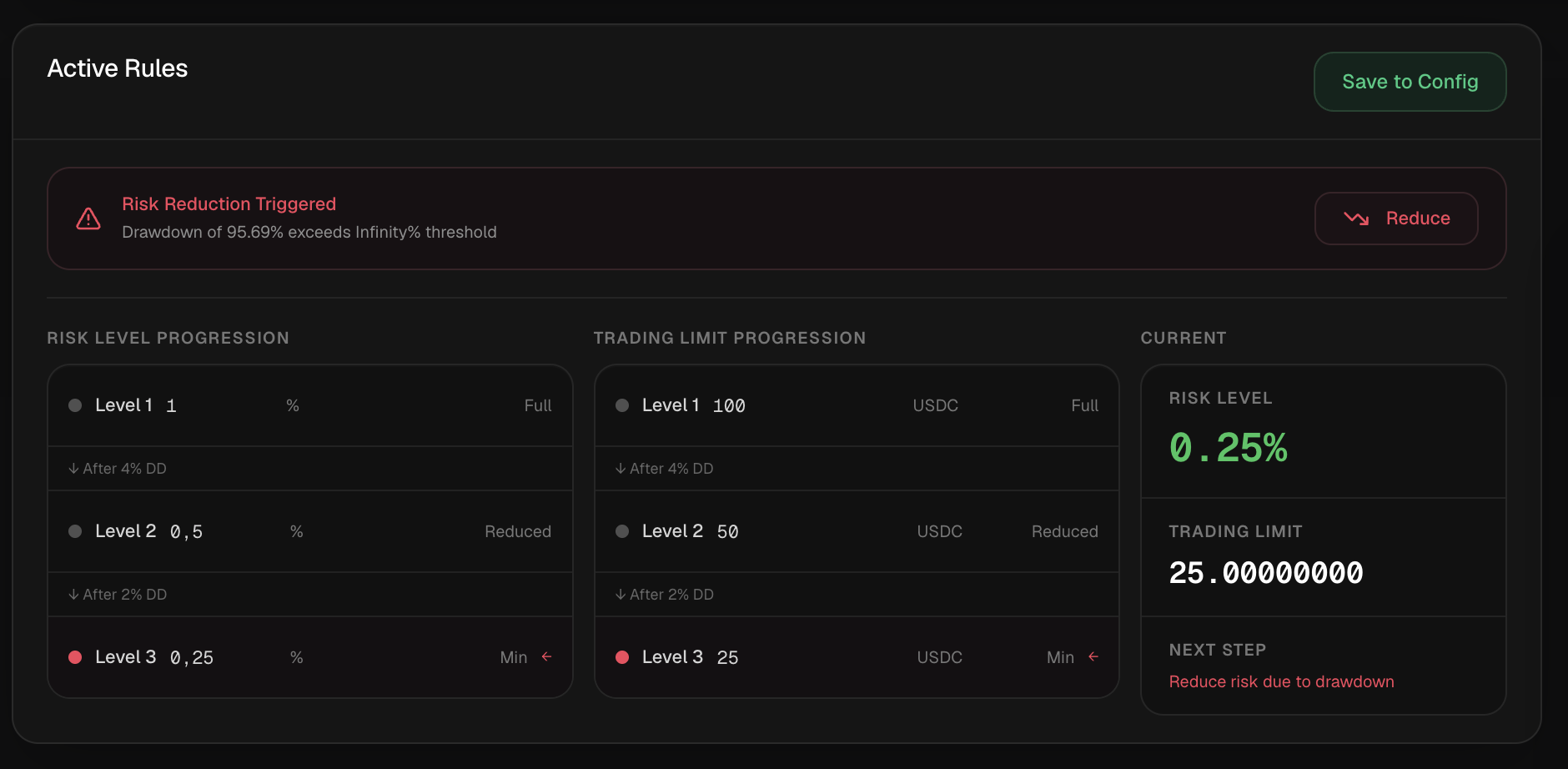
Risk management in Gunbot Live is about visibility and discipline. The interface can help you review exposure, balances, drawdown, active orders, strategy detail, and warning signs, but it cannot remove market risk or make a strategy safe by itself.
Risk controls reduce blind spots, not risk itself. Crypto trading can lose money quickly.
What This Feature Does
Risk review is there to slow you down before a bad setting becomes an expensive setting. When the data is available, you can review account state, pair state, drawdown, exposure, open orders, and strategy behavior before changing how the bot trades. You can use this data to enforce a risk management profile on a per pair basis, to keep risks within an acceptable range.
Operational Checks
Before changing settings, check active orders, exposure, drawdown, and the exchange API permissions behind the setup. Backtests can inform a decision, but they are not live guarantees. Keep a manual intervention plan for disconnections, exchange outages, or behavior you do not understand.
Trading Reality
It gives Gunbot a browser workspace for monitoring, strategy work, backtesting, risk review, history, and exchange-connected operations. These pages explain what the product does. Your account data stays on your local trading bot, behind login.
Operational Limits
The dashboard depends on the connected Gunbot instance, the exchange API, and the network between them. It can make problems easier to notice, but it does not remove market risk or take responsibility away from you: exchange permissions, strategy settings, open orders, and capital allocation still need your review.
Plain Definition
Risk management is the discipline of limiting how badly a setup can behave when the market, exchange, strategy, or your assumption is wrong. A dashboard can help reveal risk, but you still need rules for sizing, intervention, maximum drawdown, API permissions, and correlated exposure.
Risk Signals To Watch
Risk starts to show up when drawdown grows faster than expected, exposure rises while realized PnL still looks fine, many orders sit near the same market level, fees consume the edge, trading frequency climbs, or futures logic depends on leverage, funding, or margin assumptions you have not reviewed.
Practical Risk Routine
| Routine | Purpose |
|---|---|
| Pre-trade review | Check pair, market type, balance, trading limit, funds reserve, open orders, and strategy settings. |
| Live monitoring | Watch exposure, drawdown, fills, exchange errors, and whether behavior matches strategy intent. |
| Post-trade review | Inspect ledger, realized PnL, fees, time in market, and whether settings need adjustment. |
| Emergency plan | Know how to stop automation, cancel orders, close exposure, and verify exchange state. |
Risk Management Is Not A Profit Engine
Risk tools do not create edge. They help you avoid hidden exposure, bad sizing, stale data, configuration mistakes, and overconfidence after a good run. The goal is to survive enough market regimes to evaluate strategy quality honestly.
External references
- Gunbot Unlimited risk management layer: Official context for pair-level drawdown, balance, and risk review in the wider Gunbot Unlimited product.
FAQ
Can Gunbot Live eliminate trading risk?
No. It can help enforce risk management rules, and help with monitoring and review, but market, execution, liquidity, configuration, and exchange risks remain.
What should I watch first?
Start with open orders, balances, exposure, drawdown, and whether bot behavior matches the selected strategy settings.
What risk metric should you watch first?
There is no single universal metric, but exposure, drawdown, open orders, and balance availability are usually more urgent than headline PnL.
Why is futures risk different from spot risk?
Futures can add leverage, liquidation, funding, margin, and contract mechanics. A small price move can have a larger account impact than spot exposure.
Last updated: