
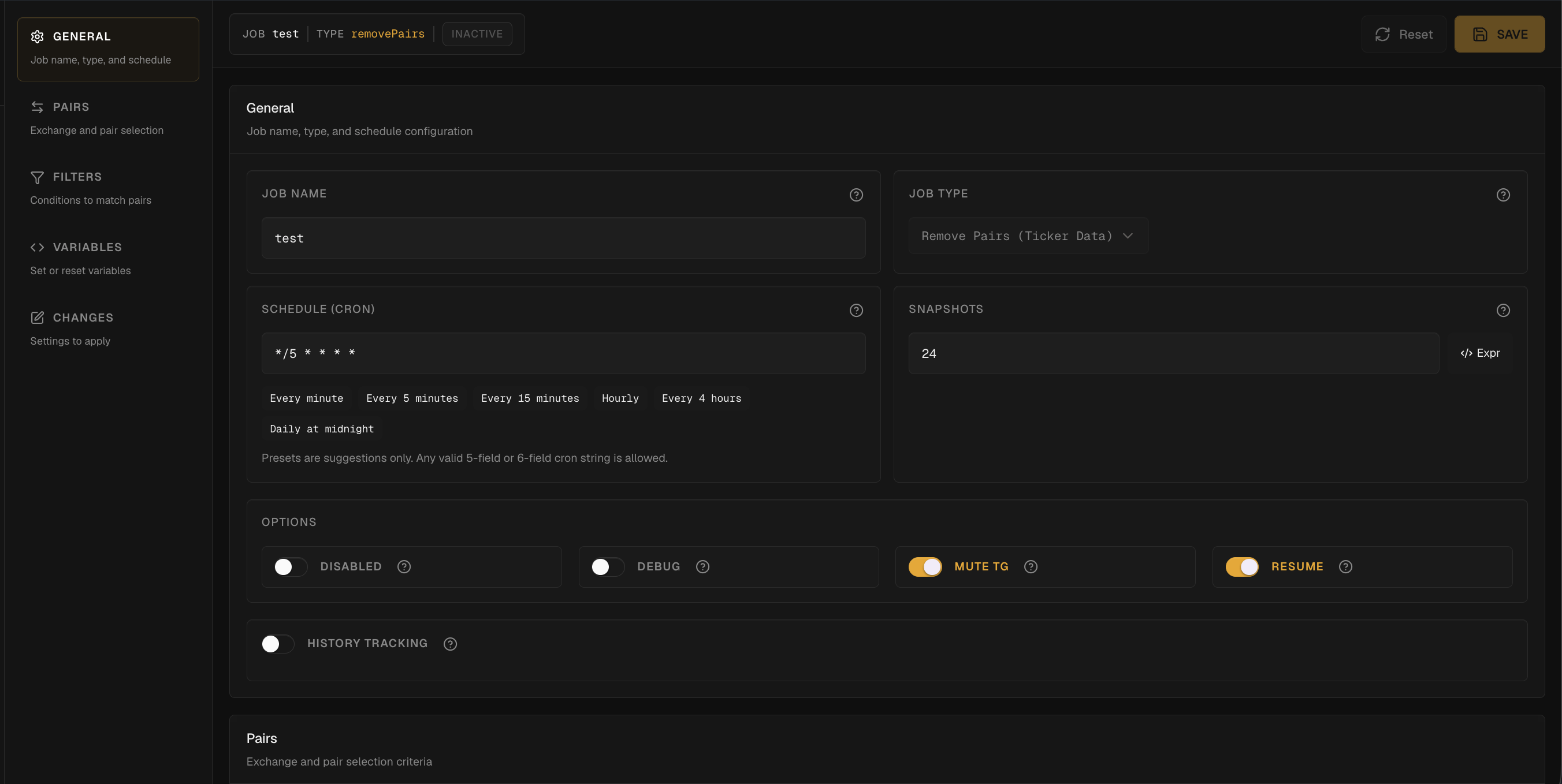
AutoConfig helps you adjust selected strategy or pair settings as markets move. It is useful for workflows that need market-aware configuration updates, but it still requires understanding, limits, testing, and review because automated settings can change live bot behavior quickly.
AutoConfig can change live behavior quickly. Review rules before enabling them with real capital.
What This Feature Does
Autoconfig is for user defined rule-based configuration changes. Instead of treating settings as static, you can define rules that adjust behavior as conditions change, then review those rules close to the dashboard, strategy, risk, and history context they affect.
Example Workflow
You define conditions for changing selected settings, watch market behavior, review the resulting configuration updates, and check risk before letting changes affect live operation.
Risks And Limits
The limits matter: Automatic setting changes can magnify mistakes if rules are wrong. Market-aware updates do not mean market prediction. You should know how to pause, review, or reverse changes.
Trading Reality
It gives Gunbot a browser workspace for monitoring, strategy work, backtesting, risk review, history, and exchange-connected operations. These pages explain what the product does. Your account data stays on your local trading bot, behind login.
Operational Limits
The dashboard depends on the connected Gunbot instance, the exchange API, and the network between them. It can make problems easier to notice, but it does not remove market risk or take responsibility away from you: exchange permissions, strategy settings, open orders, and capital allocation still need your review.
Plain Definition
AutoConfig is configuration automation. Instead of manually editing settings every time market conditions change, you can define rules that update selected parameters when defined conditions are met.
What Autoconfig Can Adjust
Autoconfig can change trading limits, sizing rules, strategy parameters, pair-level settings, enable/disable behavior, and configuration templates as market conditions or risk thresholds change. That power is useful only when the rules are understandable and auditable.
Autoconfig Governance
Autoconfig should be treated like live trading logic. A good workflow includes readable rules, visible last changes, a way to inspect variables and filters, conservative default limits, and a manual plan for pausing or reversing an unwanted update.
Common Autoconfig Mistakes
Autoconfig becomes risky when one volatile candle triggers oversized changes, too many parameters change at once, rules depend on stale data, or a live strategy changes immediately in ways you did not intend.
FAQ
Does autoconfig guarantee better settings?
No. It automates configuration logic. The quality of the result depends on your rules, market behavior, and testing.
Should autoconfig be monitored?
Yes. Configuration automation should be monitored like trading automation.
Is autoconfig the same as artificial intelligence?
No. It is rule-based configuration automation. It can be powerful, but it follows the logic you define.
Who should use autoconfig?
Use it only when you understand the settings being changed and can monitor the consequences. It is not a beginner shortcut for unknown strategies.
Last updated: